
Labour Market
Bangalore's Gig Workers: Income Volatility Behind the Platform Numbers
Platform companies report record order volumes. The workers fulfilling those orders describe something considerably more uncertain.
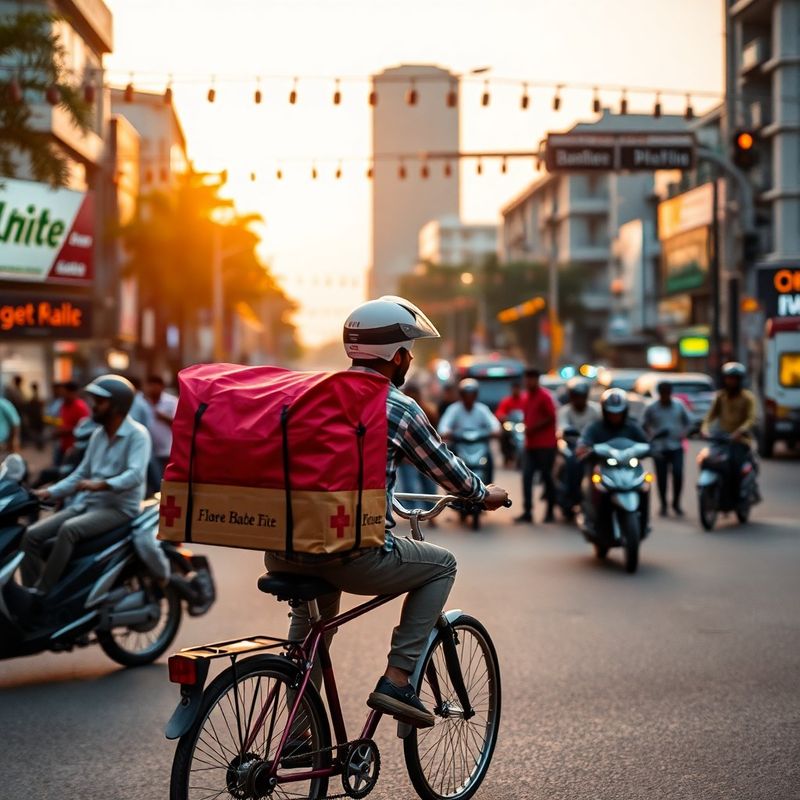
Bangalore is home to an estimated 2.5 to 3 lakh active gig workers — delivery riders, cab drivers, freelance service providers — whose livelihoods depend on platform algorithms they cannot audit and incentive structures that change with little notice. The platform companies operating in Karnataka report impressive aggregate metrics: order volumes, registered partner counts, and city-level growth rates. What these metrics do not capture is income variance at the individual level. A delivery rider who earns ₹800 on a busy Friday evening may earn ₹200 on a Tuesday afternoon, despite working comparable hours. Monthly gross earnings for Bangalore's food-delivery riders ranged, according to surveys conducted by labour researchers at a Bangalore-based think tank in 2023, between ₹12,000 and ₹22,000 — but averages obscure the volatility. The same rider who earns ₹20,000 one month may earn ₹14,000 the next if a platform adjusts its surge pricing formula or if a competing app launches a promotional campaign that redistributes order flow.
The absence of social security coverage — no Employees' State Insurance, no Provident Fund enrolment, no paid leave — means that income volatility translates directly into consumption volatility for households. When a rider's income drops by 30 per cent in a given month, the adjustment is not made through savings; most gig workers in Bangalore's outer-ring road corridor carry little financial buffer. The adjustment is made through deferred rent payments, reduced food spending, and postponed medical care. Karnataka's Labour Department has discussed a state-level welfare fund for platform workers modelled on the construction workers' welfare board, but as of the end of 2023 no legislative framework had been introduced. The central government's Code on Social Security, 2020, provides for gig worker inclusion in welfare schemes, but the relevant rules for platform-worker coverage had not been notified at the national level as of this writing. The numbers that platform companies cite in their investor presentations and the numbers that workers experience in their bank accounts are describing different economic realities — and public policy has not yet closed the gap between them.